When Is the Best Time to Paint a House in Connecticut? A Seasonal Guide for Suffield Homeowners
Ask any local painting crew in the Connecticut River Valley when they book most of their exterior work, and you’ll hear a similar answer: not whenever the calendar happens to be open, but during a fairly narrow seasonal window. Connecticut’s freeze-thaw winters, humid summers, and unpredictable spring rains all affect how well paint bonds to a surface and how long it lasts once it’s on. Getting the timing wrong doesn’t just risk an inconvenient rain delay — it can cause paint to fail within a year or two. Here’s what the data says about the best time to paint a house in and around Suffield.
The Temperature Window That Actually Matters
Most modern acrylic latex exterior paints cure best between 50°F and 85°F in relatively dry conditions, and manufacturer guidelines typically set a minimum application temperature between 40°F and 50°F for both ambient and surface temperature. Latex paint is also vulnerable to freezing: applying it near 28°F to 32°F can cause ice crystals to form inside the paint film, compromising its structure before it can cure properly. Oil-based paints have their own limitations and generally struggle to cure below 40°F. In practice, this means both the air and the wall surface need to stay within the paint manufacturer’s recommended range for the full drying period — not just at the moment of application.
Freeze-Thaw Cycles and Connecticut’s Older Housing Stock
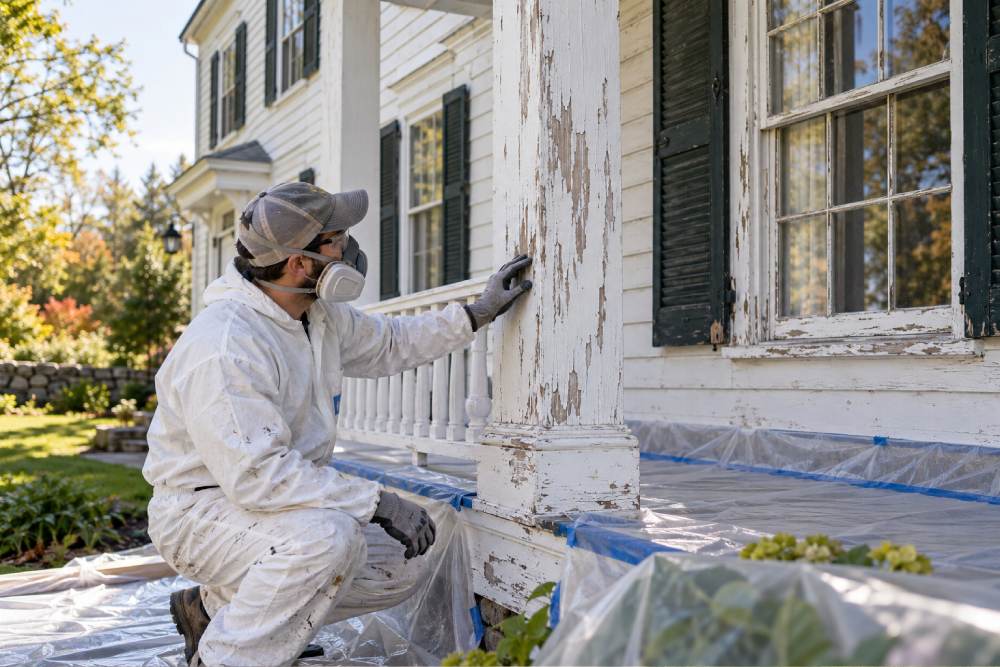
Connecticut winters bring repeated freeze-thaw cycles, where moisture works into small cracks, freezes, expands, widens the damage, and then thaws again. This is especially hard on wood siding and trim — exactly the kind of building material found throughout Suffield’s Historic District and much of its older housing stock. Paint applied too close to the cold season, before it’s had time to fully cure, is more likely to crack or lose adhesion once freeze-thaw cycles begin. Painting during a stable stretch of moderate weather gives the paint film time to cure fully before winter arrives.
Season-by-Season: What to Expect in Suffield
Spring is the traditional start of painting season across the Northeast, typically from mid-to-late April once overnight temperatures stabilize above freezing. The trade-off is unpredictability — spring in Connecticut brings frequent rain and swinging temperatures, which can delay schedules and push projects later than planned.
Summer offers the most reliable stretch of warm, dry days, but high heat and humidity create their own challenges: paint can dry too quickly in direct sun, making it harder to achieve a smooth, even finish and increasing the risk of visible lap marks.
Fall is widely considered the best all-around season for exterior painting in New England. Cooler, more consistent temperatures and lower humidity let paint dry at a controlled, even pace rather than flashing off too fast in the heat or staying tacky too long in the cold. Painting contractors across the region generally recommend booking fall projects early, since the window closes once nighttime temperatures start dropping toward freezing.
Winter painting is possible but far from ideal. Cold-weather-rated paints can be applied down to around 35°F, but most professional contractors won’t warranty work done outside standard temperature ranges, and both air and surface temperatures must stay above the paint’s minimum threshold for at least 24 hours after application to avoid failure.
What Happens When You Paint at the Wrong Time
Paint applied too early in spring or too late in fall — when there’s still a real risk of frost — can fail to bond properly, leading to peeling, blistering, or an uneven, chalky finish within a season or two. Paint applied during peak summer heat can dry too fast to level out smoothly, leaving visible brush or roller marks. In both cases, the fix usually means scraping, re-prepping, and repainting sooner than expected, which often costs more than waiting for the right window.
Humidity and Dew Point Matter Almost as Much as Temperature
Temperature gets most of the attention, but humidity and dew point play just as large a role in how a paint job holds up. If the surface temperature is close to the dew point, moisture can condense on the wood before or immediately after painting, which interferes with adhesion even if the air temperature looks fine on paper. This is one reason early morning painting — when dew hasn’t fully burned off — can be riskier than it looks, and why experienced crews check both the forecast and the surface itself before starting a coat, not just the thermometer.
Planning a Project Around Connecticut’s Short Painting Season
With a reliable outdoor painting window of roughly six months — late April through October — Connecticut homeowners who want exterior work done during the ideal fall stretch often need to book well ahead, since that window is also when demand is highest across the region. Homeowners planning a full exterior repaint, especially on a larger or multi-story historic home, are generally better served scheduling in late spring or booking early for fall rather than waiting until the last warm weeks of the season, when crew availability tightens and there’s less buffer if weather pushes the timeline back.
Why Bengston Painting Services
Because Bengston Painting Services works exclusively in and around Suffield, Enfield, Windsor Locks, East Granby, Granby, Windsor, and Southwick, Massachusetts, scheduling is built around this specific climate, not a generic national painting calendar. That means projects are planned around realistic weather windows for the Connecticut River Valley, with an eye toward giving every coat enough time to cure fully before temperatures swing.
Want your project scheduled around a real weather window instead of guesswork? Contact Bengston Painting Services to plan your next paint job.
Frequently Asked Questions
What is the best month to paint a house exterior in Connecticut?
Most contractors in the region consider September and October the most reliable months, thanks to consistent, moderate temperatures and lower humidity, though the full painting season generally runs from late April through October.
Can you paint a house exterior in the summer?
Yes, but timing matters—mornings or late afternoons are usually better than direct, high-heat sun, which can make paint dry too fast and leave visible lap marks.
What temperature is too cold to paint outside?
Most latex exterior paints shouldn’t be applied below 50°F, and can be damaged by freezing temperatures near 32°F. Some cold-weather formulas are rated down to 35°F, but both air and surface temperatures need to stay above that threshold for at least 24 hours after painting.
Does interior painting have the same seasonal restrictions?
No — interior painting can generally be done year-round since temperature and humidity are controlled indoors, which is why winter is a popular time for interior projects while exterior work is on pause.
How long does exterior paint need to cure before winter?
Paint needs time to fully cure — not just dry to the touch — before sustained freezing temperatures arrive, which is why most contractors avoid starting new exterior projects much past mid-October in Connecticut.
Sources
- CertaPro Painters (Boston South Shore) — “How New England’s Coastal Climate Impacts Exterior Painting & Staining” — https://certapro.com/boston-south-shore/?p=5855
- CertaPro Painters — “Can I Paint My Exterior in the Winter?” — https://certapro.com/boston-south-shore/?p=5184
- CertaPro Painters (Woburn) — “Why Fall Is the Perfect Time to Paint Your Woburn Home” — https://certapro.com/woburn/?p=2169
- CertaPro Painters (Danbury & Ridgefield) — “Exterior Painting in Danbury & Ridgefield: Protecting Your Home from New England Weather” — https://certapro.com/danbury-ridgefield/?p=1840
- Alpine Painting — “The Best Time of Year to Start Exterior Painting Projects in New Jersey, New York, and Pennsylvania” — https://www.alpinepainting.com/blog/the-best-time-of-year-to-start-exterior-painting-projects-in-new-jersey-new-york-and-pennsylvania